Careers
3 Nov 2025
Thea Stein
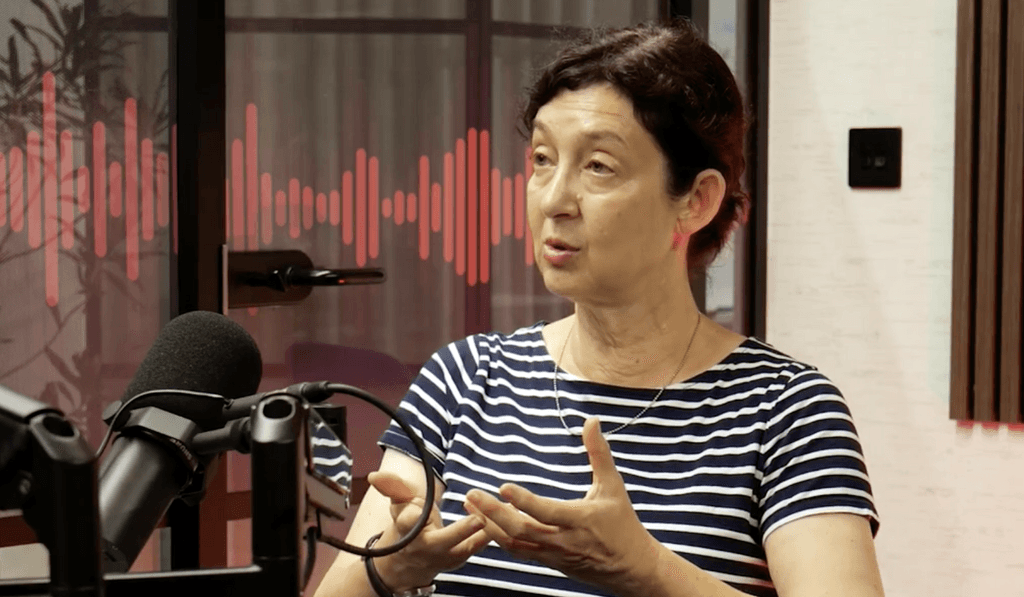
Nuffield Trust CEO Thea Stein warns NHS transformation requires psychological safety and clarity on outcomes, not just structural change.
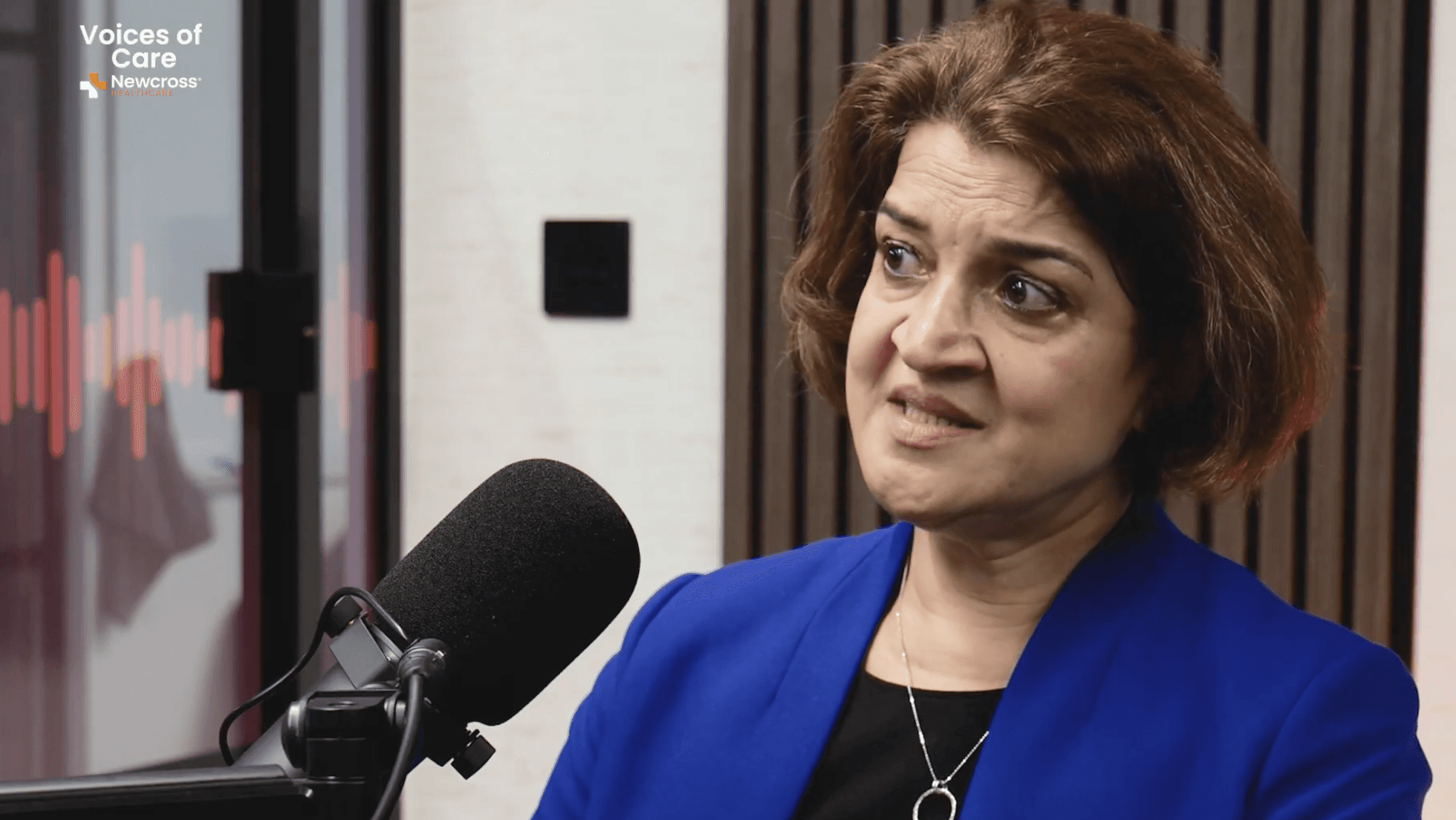
The NHS's ambitious shift to neighbourhood health services faces fundamental questions about purpose and culture that must be addressed before structural reforms can succeed, according to Thea Stein, Chief Executive at the Nuffield Trust, speaking on the renowned Voices of Care podcast by Newcross Healthcare.
In conversation with host Suhail Mirza, Stein delivered a frank assessment of the challenges facing the Government’s 10 Year Health, calling for clarity on objectives, upfront investment, and a fundamental shift in organisational culture to ensure any large-scale transformation has a hope of truly succeeding.
CLARITY NEEDED ON OUTCOMES
In a wide-ranging conversation, Stein challenged the premise underlying the 10 Year Health Plan’ community-focused transformation: "I don't think it's necessarily completely clear yet what part of the problems that the NHS and society face we're aiming to solve by this and what the outcomes are we're wanting to see."
Stein warned against oversimplified assumptions about cost savings that some claim will flow from shifting care from acute to community settings, stating: "So the idea of a simple see-saw financially, I think is going to be quite difficult to realise.”
Rather than generating immediate savings, excellent community services could enable hospitals to work more effectively:"what can happen and should happen is that by having really excellent community services and primary care services, you create more capacity for a hospital to work in a much more productive way."
However, she cautioned whether this could generate overall savings in healthcare budgets in the short term: "I'd question whether or not it means you can take that money out. Whether or not you will work in a more productive way."
INTERNATIONAL LESSONS: INVEST FIRST, TRANSFORM LATER
Drawing on international evidence, Stein highlighted crucial lessons from countries that have attempted similar transformations from hospital to community settings: "both Ireland and Denmark have invested heavily in community services. This was not something that was predicated on a shift of money."
She also tempered expectations about timelines, drawing on wider international examples : "What you can see in all of them, though, is even after ten years, you don't have a perfect system."
The challenge for England, she suggested, is that "You're going to have to build up community services; you can do it with new money. But that's clearly not on the table."
CULTURE AND PSYCHOLOGICAL SAFETY: THE MISSING INGREDIENT
Stein made a powerful case that organisational culture—not just policy or technology—will determine whether the 10 Year Plan’s vision for NHS transformation succeeds. "We always say that people are our greatest asset, but I'm not sure the NHS acts as though they really believe that people are their greatest asset," she observed.
She advocated for what she termed an “ethnographic” approach to change: "you go and you walk the floors, you go and you listen. You're alongside people. You don't make an assumption about what you believe is going on."
This deep understanding, she argued, is essential: "with that really deep understanding, you have the ability to create change and to lead change."
THE COMPLEXITY CHALLENGE
Stein emphasised that leading NHS transformation requires comfort with uncertainty: "the ability to lead complex change in the NHS; and to lead it now needs the ability to be comfortable in an area where you don't know all the answers."
She noted the inherent complexity of the the “shift” to community settings; for example the potential changes in employment terms for staff that may be redeployed into different settings: "it's always about people, power, politics, but it's also about detail. You may lose your continuity of employment (if services are) now being run in a GP practice rather than in a hospital. This is not easy stuff."
Central to her argument was the concept of psychological safety. "None of us get the best out of people unless we are working in a place where we feel psychologically safe," Stein explained, adding that "People are very worried at the moment. When you're worried, you're not at your most psychologically safe."
She emphasised this isn't a "soft" issue but fundamental to organisational performance, pointing to successful companies like Google (and the “Aristotle Project”): "these are companies who have put a lot of investment into the idea of psychological safety. And that's not because they're lovely and fluffy and soft. It's because they want to make shed loads of money." Crucially, Stein argued that leaders at all levels have responsibility for creating this environment: "whether you're a clinical leader of a team or you're the Chief Executive of an organisation. You have the ability to provide psychological safety in your own organisation."
THE PRODUCTIVITY PUZZLE: UNDERSTANDING THE WORKFORCE
The 10 Year Health Plan, the Darzi Report and Ministers all underline the need to radically improve NHS productivity; Stein laid bare the challenge stating: however you look at it, the productivity from particularly acute care has gone down and the
number of staff in situ has gone up.
Stein also highlighted the critical gaps in understanding that need to be filled when it comes to the nature and changes in the workforce . She noted that while staff numbers have increased dramatically, the composition and experience profile has shifted significantly: "So you have all these extra staff. But first question is to ask who are they? Now suddenly you find out, well, this nursing workforce that's running much of your hospital is now younger."
She stressed the need to dig deeper: ”How experienced are they?"
Stein also raised questions about international recruitment: "there's a massive debate clearly about bringing a workforce in from overseas."
THE SKILL MIX EXPERIMENT
Skill Mix is another aspect of the workforce that Stein needs scrutinising further: "We have more skill mix than anywhere else in Europe. Interesting fact.We've no idea if that means that we're more productive or less productive."
Stein cautioned that the country is conducting a vast, largely unevaluated experiment: "we're in the middle of a huge experiment in this country. We're with taskification and skill mixing a lot. And we're not actually doing an awful lot of evaluation about what what's happening."
TECHNOLOGY: NOT A SILVER BULLET
While acknowledging benefits like the NHS app—"I like the NHS app. I think it's great"—Stein questioned whether technology alone could drive transformation: "Well, are you going to then be able to move to where tech transforms productivity?"
She cautioned against viewing technology as a panacea, especially when basic infrastructure remains inadequate: "I've just been speaking to somebody who was talking about the fact there aren't enough chairs in their A&E!"
A CALL FOR LEADERSHIP AND CULTURAL CHANGE
Stein concluded that successful transformation requires fundamental cultural change: "The most important thing you need to do is create the right culture for everybody to flourish in, and for everybody to feel safe in."
Her message to policymakers and NHS leaders was clear: before embarking on major structural reforms, the service must first establish clarity about objectives, invest in building capacity, and create the psychological safety that enables staff to deliver their best work and navigate complex change.
The renowned Voices of Care podcast, hosted by Suhail Mirza, continues to provide a platform for sector leaders to address critical issues facing health and social care across the UK.
About the Voice of Care Podcast
The Voices of Care podcast, a Newcross Healthcare production hosted by Suhail Mirza, offers candid conversations with key figures in health and social care. Created to give a platform to those shaping the future of care, the podcast explores the biggest challenges facing the sector while spotlighting inspiring stories of innovation and leadership.
About Newcross Healthcare
Newcross Healthcare is one of the UK's leading providers of social and health care services, both within the community and through healthcare staffing. With an extensive network of over 165,000 registered healthcare professionals and nearly three decades of expert experience, Newcross delivers high-quality care solutions that meet the diverse needs of patients and communities.
For more information, visit www.newcrosshealthcare.com