Careers
8 Dec 2025
Mumtaz Patel
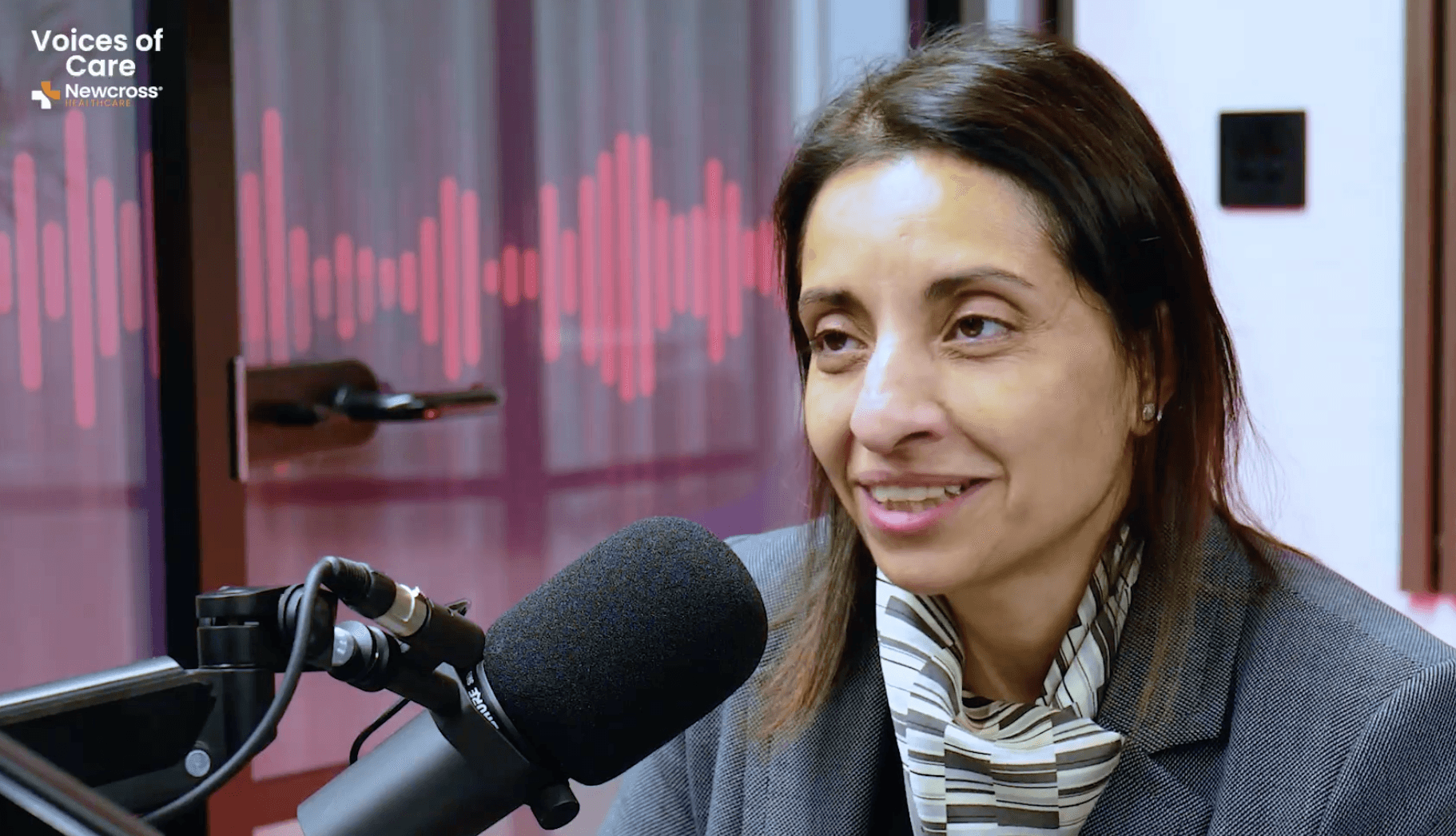
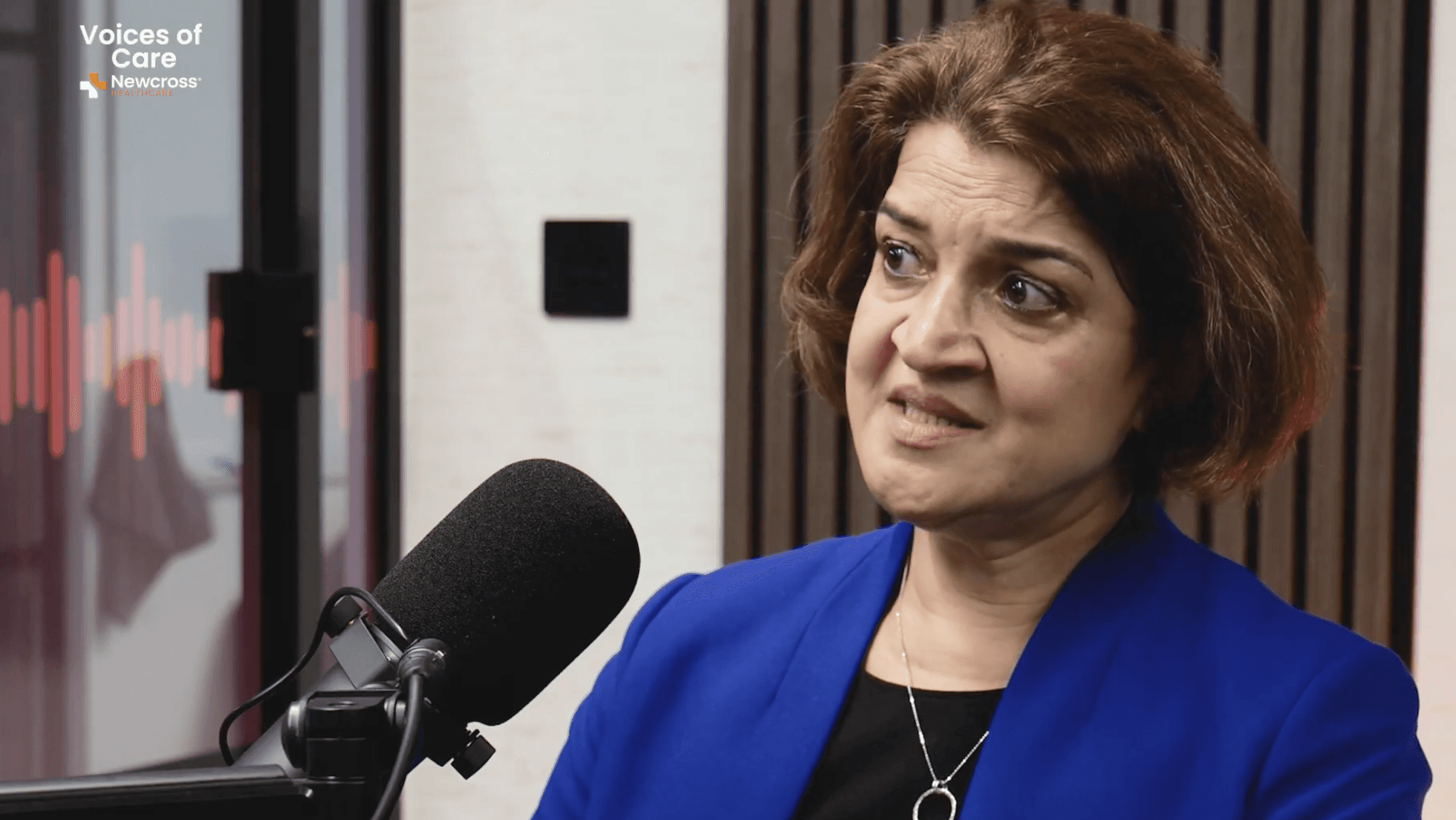
Professor Mumtaz Patel discusses the need for the above vision, the cultural and operational pressures (including “corridor care”)facing physicians and the vital importance of supporting female medical leaders across the globe.
In a compelling episode of Newcross Healthcare's Voices of Care podcast, Professor Mumtaz Patel, the 123rd President of the Royal College of Physicians and the first South Asian woman to lead the oldest medical Royal College, delivered an urgent assessment of the mounting pressures facing NHS doctors and set out her vision for transforming medical education for the 21st century.
CORRIDOR CARE: “Undignified Care”
Speaking with host Suhail Mirza, Professor Patel revealed shocking findings from the Royal College's recent snapshot surveys showing that undignified corridor care has become a year-round reality. August surveys found that nearly 60% of physicians were treating patients in temporary care environments – corridors and even cupboards - with 40-45% of members confronting these conditions daily.
Professor Patel described the impact: "You wouldn't want to care for your own mum like that, would you?" She emphasised the urgent need to resist normalisation: ”What we can't really do at all is normalise it, because this is not acceptable. This is undignified care."
Professor Patel warned these conditions are causing severe moral injury among healthcare professionals, describing how doctors experience "moral injury, levels of anxiety, stress, even post-traumatic stress disorder" with staff losses occurring daily. She explained the psychological toll: "We all go into the NHS .....wanting to do right by our patients. And if you can't do that, you really struggle with that. You go home and think, I've not done a good job."
MEDICAL TRAINING "NOT FIT FOR PURPOSE" - RADICAL REFORM NEEDED
Professor Patel declared that current medical training models require radical reform. Drawing on her role as former Vice President for Education and Training at the Royal College, she outlined how the College's Next Generation campaign has been driving calls for a comprehensive medical training review.
Professor Patel was unequivocal: "I think I've said in many meetings, even five years back, that current training models are not fit for purpose. We can't do tweaks. We need a radical reform and rethink."
The Royal College's advocacy contributed directly to the government's medical training review led by Chris Whitty and Steve Powis. Professor Patel revealed the College's success in shaping the review, noting they put forward their top ten priorities and "lo and behold, when it was launched, a majority of what the asks were in the diagnostic review."
EMBRACING NON-TRADITIONAL PATHWAYS AND MEDICAL DIVERSITY
Professor Patel highlighted a significant shift in medical careers, with non-traditional training pathways - including locally employed doctors, specialty and associate specialist (SAS) roles, and routes taken by internationally qualified doctors - experiencing dramatic growth.
She identified flexibility as key: "People want flexibility. People want to stay local to home. Like myself, I had caring responsibility. I had young children. And it's really hard if you're moving. I think I moved, I think twelve hospitals in my training years and every three to six months."
Crucially, she emphasised these routes should not be seen as inferior: "It (non traditional route) as seen was an inferior path once upon a time. actually many people are equally, if not better in different pathways. I very much respect that because that's personal choice at the end of the day."
PRESIDENT'S PERSONAL JOURNEY: OVERCOMING CLASS BARRIERS AND DISCRIMINATION
In a powerful personal testimony, Professor Patel shared her journey from an inner-city Preston comprehensive school to becoming President of the Royal College of Physicians. She described attending a careers fair where her aspirations were dismissed. Professor Patel recalled: "When I went to the careers Fair in Preston, and I went to the medicine stall and picked up the pamphlets and they said, which school do you go to? And I told them and they said, oh, no, nobody from that school goes to university from that school, so you’ll be lucky. They even took the pamphlets away."
NEED FOR CULTURAL CHANGE IN MEDICAL EDUCATION
Professor Patel also addressed sexual harassment in medical training , citing BMJ research showing 41% of women and 19% of men medical students have faced sexual harassment and assault. Drawing on her own experiences, she acknowledged: "I think in my own experience as a medical student in the nineties, I think many of us have experienced certain degree of sexual misogyny and harassment”. She explained why many didn't speak out: "There was a power differential. And I always, always sort of thought that if I speak up, then, you know, that would destroy my career."
Professor Patel said there should no place for such behaviour and called for systemic change: "We need to empower and support the individuals both going through that and experiencing that.”
TACKLING DIFFERENTIAL ATTAINMENT THROUGH SYSTEMIC CHANGE
Professor Patel outlined her extensive work addressing the attainment gap affecting doctors from ethnic minority backgrounds and international medical graduates.
She explained her comprehensive approach to look at the “intersectionality of factors”: "At a system level, I think it's more complicated . So the micro factors of understanding different learning styles that more holistic supervision at the meso level of understanding induction, support, supervision, assessment and then at policy level at a national level, macro level, you know, college setting policies, standards, exams, how recruitment works, all these factors, I think interrelate."
She emphasised systemic solutions: "It's not about the individual not being capable, it's about how the systems adapt. And if you have a thriving, supportive, inclusive culture, people will thrive within that."
GLOBAL LEADERSHIP ON GENDER EQUALITY IN MEDICINE
Professor Patel, recipient of global recognition for her work on gender equality, highlighted the stark gender disparity in healthcare leadership: while 70% of the global healthcare workforce is female, only 25% of senior positions (in high-income countries) are held by women. She described the issue as critical: "That talent, loss of talent and all the gender leadership gap affects health outcomes.”
Professor Patel discussed the work of the Global Women Leaders program three-step to support female leaders that rests on stakeholder engagement, developing male and female champions locally, and leadership training. Recently in Iraq, Professor Patel found herself the only woman among eight male deans of medical schools, reinforcing the urgent need for systemic change.
ENVIRONMENT AND HEALTH INEQUALITIES: CORE PHYSICIAN RESPONSIBILITIES
Professor Patel positioned environmental impact on health and tackling health inequalities as core physician responsibilities. The Royal College's recent surveys found 75% of members are deeply concerned about the NHS's lack of preparedness for environmental impacts.
Drawing on her clinical work in Manchester as a consultant nephrologist, Professor Patel illustrated stark health inequalities: "I go to North Manchester to do my clinics. My fifty-year-old would look like a seventy-year-old, kind of smoking, alcohol deprivation, all these things. Mortality is so high. And I go to South Manchester and, you know, my ninety-year-old will be thriving and that's wonderful. But we want we don't want that disparity. It's really unfair." She called for health inequality to be integral to all physicians' work: "Prevention and Health inequality should be integral to all physicians.”
ROYAL COLLEGE STRATEGY: BECOMING THE VOICE OF MEDICINE
Professor Patel revealed that the Royal College is developing a comprehensive new strategy for 2026-2029, following extensive consultation with members, fellows, and stakeholders. The emerging themes centre on voice, advocacy, community, sense of purpose, education standards, and core policy priorities including workforce, prevention and health inequalities, sustainability, and research.
The strategy will be launched in spring 2026 with operational plans and metrics for measuring implemented success. Professor Patel emphasised: "There's no point having a nice, lovely document. And I think that's the kind of things that we've said about the ten-year (Health)plan that as a document; it's great, but operationalising it and how we measure success of that is equally important."
WORKFORCE PLAN: FIT FOR THE FUTURE
Looking ahead to the government's workforce plan expected in spring, Professor Patel outlined key requirements: proper workforce modelling to meet population needs, addressing geographical and specialty distribution particularly in deprived and coastal areas, and ensuring training aligns with workforce demands. She stated: "It needs to be fit for the future. It needs to meet the population need."
Despite the challenges, Professor Patel remains as enthused as ever about medical careers: "I wouldn't be doing anything else. It's such a rewarding career both on a patient level, because I love what I do with my patients, but also on a wider level of supporting the next generation."
END
The Voices of Care podcast, hosted by Suhail Mirza, continues to provide a platform for sector leaders to address critical issues facing health and social care across the UK.
About the Voice of Care Podcast
The Voices of Care podcast, a Newcross Healthcare production hosted by Suhail Mirza, offers candid conversations with key figures in health and social care. Created to give a platform to those shaping the future of care, the podcast explores the biggest challenges facing the sector while spotlighting inspiring stories of innovation and leadership.
About Newcross Healthcare
Newcross Healthcare is one of the UK's leading providers of social and health care services, both within the community and through healthcare staffing. With an extensive network of over 165,000 registered healthcare professionals and nearly three decades of expert experience, Newcross delivers high-quality care solutions that meet the diverse needs of patients and communities.
For more information, visit www.newcrosshealthcare.com
END