Careers
12 Jan 2026
Ben Travis
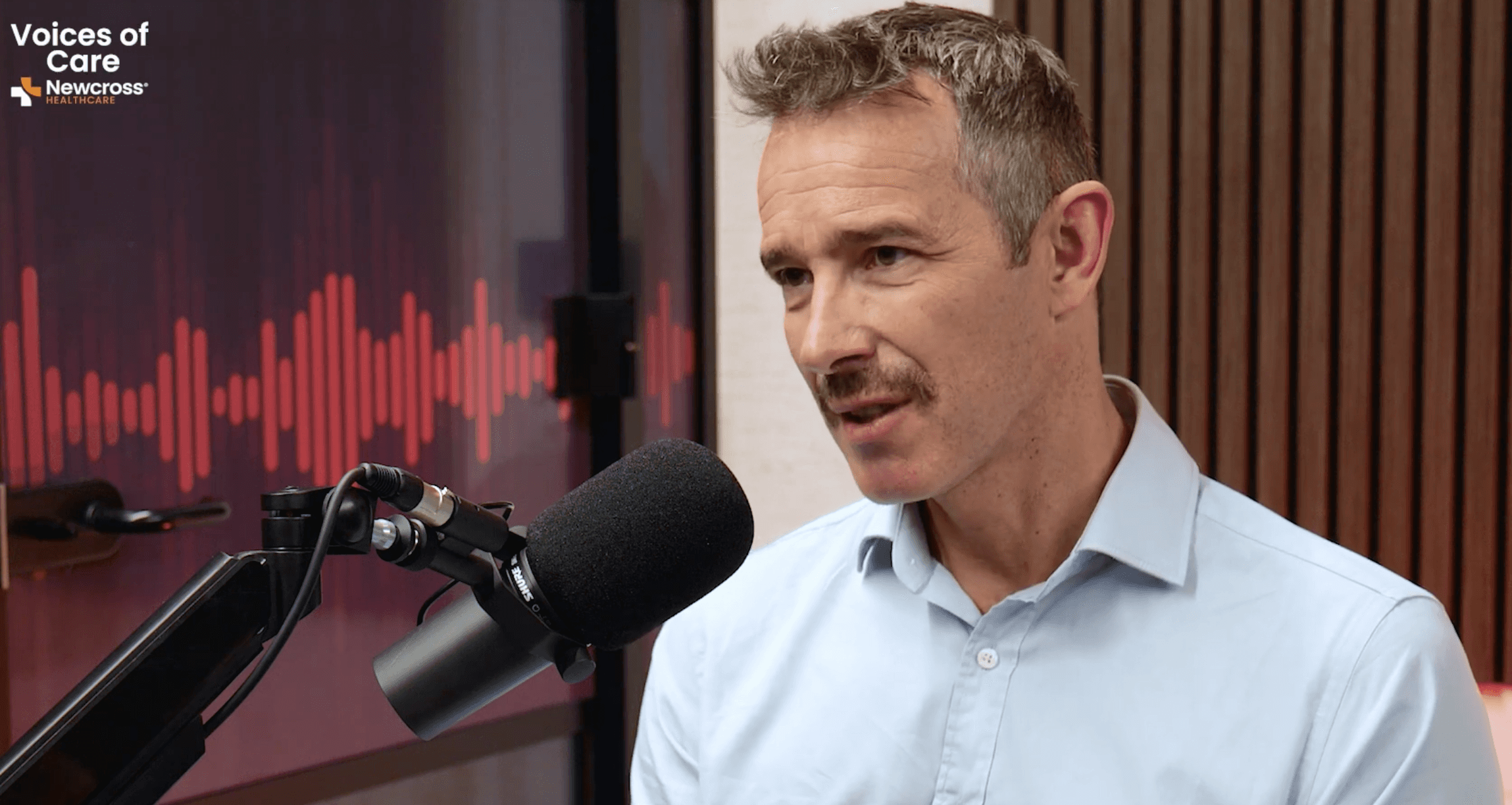
CEO of Lewisham and Greenwich NHS Trust shares leadership lessons on eliminating racial disparities in staff treatment and preparing for the Government's 10-Year Health Plan: ”We have got to be able to take the pressure off our hospitals. They suck up way more resource now, in terms of percentage of the healthcare budget, than they ever did before."
Ben Travis, Chief Executive of Lewisham and Greenwich NHS Trust (LGT), has opened up about the remarkable transformation journey of a Trust born from one of the most controversial episodes in NHS history, speaking on Newcross Healthcare's Voices of Care podcast with host Suhail Mirza.
Travis, who was ranked in the top 50 NHS leaders by HSJ in both 2024 and 2025, revealed how equality, diversity and inclusion (EDI) became the foundational element driving cultural change at LGT, a Trust that faced massive challenges (including from whistleblowing) when he joined in 2018.
CONFRONTING UNCOMFORTABLE TRUTHS
Travis did not shy away from the scale of the challenge he inherited: "When I joined in 2018, I think we were in a difficult place.” The Trust, formed from a merger during the South London Healthcare crisis which gained national coverage, had vacancy rates of 18% and a culture marred by bullying concerns.
The turning point came through a stark conversation with Ted Baker, then head of hospital inspections at the CQC. "He said, look, Ben, you've got a problem. We have never come across whistleblowing of this level before," Travis recalled.
Rather than addressing the issue behind closed doors, Travis created an independent oversight board and published (anonymised) outcomes of disciplinary cases internally. "...if you raise something, we will listen and we will take it seriously. I think that was a really important message to get out across the organisation," he explained.
The response was overwhelming: "So many people came forward and said, I want to be part of this. How can I how can I get involved? How can I step up?”
EDI AS THE DNA OF TRANSFORMATION
Serving diverse communities where 62% of Lewisham's population and 40% of Greenwich's population come from diverse ethnic backgrounds, Travis recognised that EDI couldn't be an add-on: "If we want to provide really good services to our population, we have to make sure they're inclusive."
The results speak to the depth of change achieved. Travis revealed: "When we started, the likelihood of being in a formal disciplinary if you were black was three times more likely than if you were white.... after a few years of working through that and understanding that better we had no difference at all."
Representation at senior levels has also shifted dramatically, moving from 17% to 39% of people in Band 8a and above roles from diverse backgrounds. "We're not there. I'd say we're halfway to where we want to be, but that's a really significant shift," Travis noted.
Travis also addressed difficult conversations about patient behaviour facing the Trust today: "We have lots of instances where we have patients who come in and don't want to be treated by one of our staff or might be a whole range of reasons. It might be some religious reasons, but it might also be around some racial reasons. And that is really troubling."
THE 10-YEAR HEALTH PLAN: A WARNING ON NEIGHBOURHOOD CARE
Discussing the shift to community based care in the Government's 10-Year Health Plan, Travis welcomed the direction but emphasised the need for genuine transformation: "The 10 year plan has some really exciting parts to it and we are really starting to think about what does that look like in practice? How can we start to really help make a difference to our local communities and the way that we set our care up."
Travis was blunt about the financial imperative driving change: "Probably the most expensive care you can get is care in a hospital. So we have to find a way of stemming that tide and switching over."
However, Travis issued a stark warning: "If we just do nice things in the neighbourhood that don't actually reduce length of stay or reduce admissions in hospitals, we're going to be in real trouble."
He emphasised:"We have got to be able to take the pressure off our hospitals. They suck up way more resourc e now than they, in terms of percentage of the healthcare budget than they ever did before."
The key, Travis insisted, is "unlocking some of that acute hospital spend and transferring it into the neighbourhood."
MATERNITY SERVICES AND CULTURAL HUMILITY
Given current national attention to the level of care provided in NHS maternity services, Travis highlighted the significant investment made in maternity services at the Trust, particularly following the Ockenden review. The team at the Trust has pioneered "cultural humility standards," working closely with maternity voices partnerships to understand what matters to local women and how they want care delivered.
"I often say to colleagues if we can get birth and death, right; Those are things that everyone always remembers. If we can get those two major events, right. I think people might forgive us a few things in the middle," Travis reflected.
COLLABORATION KEY TO THE FUTURE
Travis concluded by highlighting how important collaboration was for the future of the Trust with patients able to seek specialised expertise from Kings and Guys and St Thomas’ in London.
He said this (together with flexibility) was a key point the Trust was promoting to attract staff to join its workforce adding “We say to clinicians come and work with us; we have a really diverse communities you can serve and we can create some roles where part of the week you can work at Guys or Kings to do some research of further education”
END